By Bilal Ahmed
Dramatic World Cup Encounter
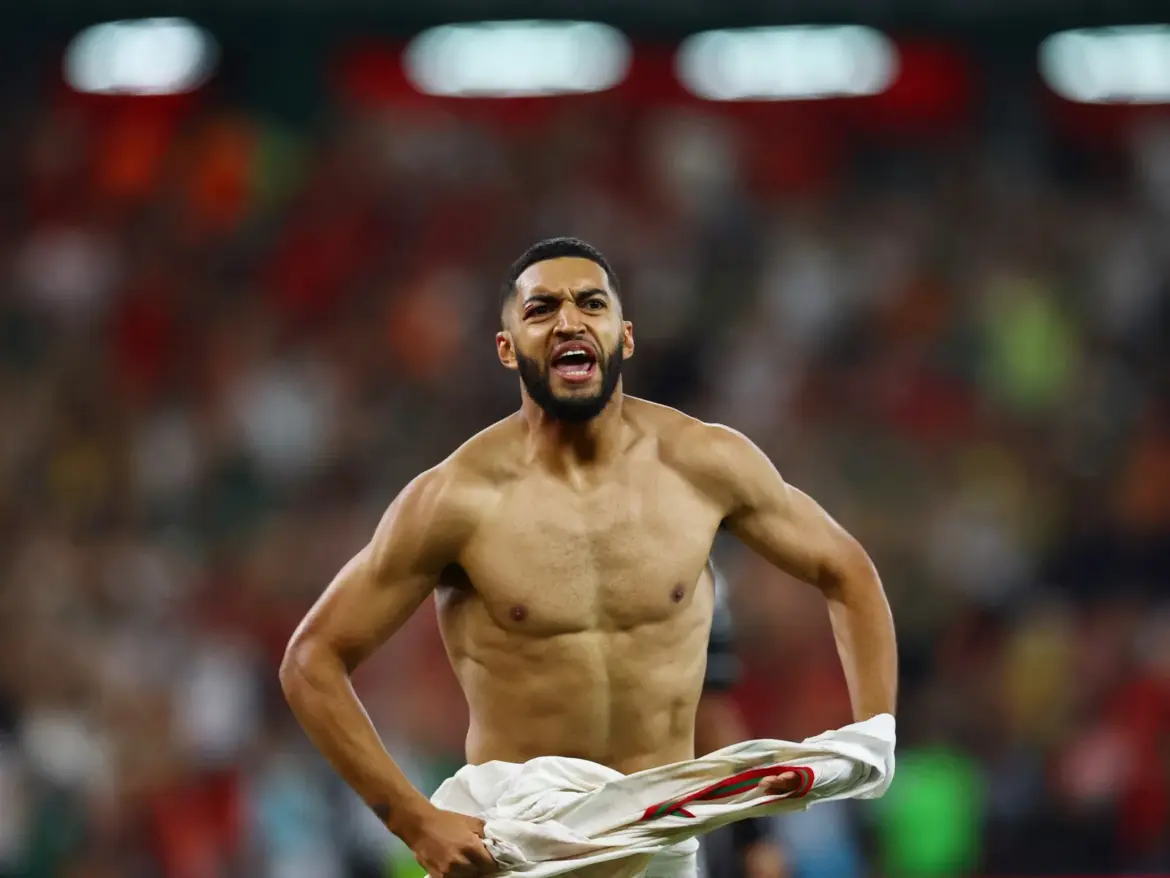
Morocco secured a dramatic victory over the Netherlands in a World Cup last-32 tie, advancing to the next stage after a penalty shootout. The match, held in Monterrey, concluded 1-1 after extra time before Morocco triumphed 3-2 in the shootout. This highly anticipated encounter carried significant societal undertones, particularly within the Netherlands due to its large Moroccan community.
The game saw Cody Gakpo put the Netherlands ahead midway through the second half. However, Issa Diop equalised for Morocco in the first minute of stoppage time, forcing the match into extra time. Despite Morocco creating more opportunities, the decisive blow was not landed until the penalty shootout. Ismael Saibari, a player for PSV Eindhoven, converted the winning spot-kick for Morocco, sealing their progression to the last 16.
The match was described as a thrilling battle, with players from both sides engaging in intense tackles. Morocco‘s goalkeeper, Yassine Bounou, made a crucial save during the shootout, blocking the Netherlands‘ fourth penalty from Crysencio Summerville. This victory sends Morocco to a clash against Canada in Houston.
Community Reactions Across the Netherlands
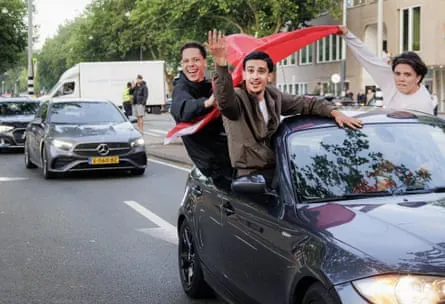
Following Morocco‘s win, celebrations erupted among the Moroccan community in the Netherlands. In Amsterdam, joyous celebrations began around 6 am, with car horns sounding and fans waving flags. Mercatorplein square, an area that has previously seen violent outbursts after some Morocco games, remained peaceful on this occasion, with the atmosphere described as pure joy.
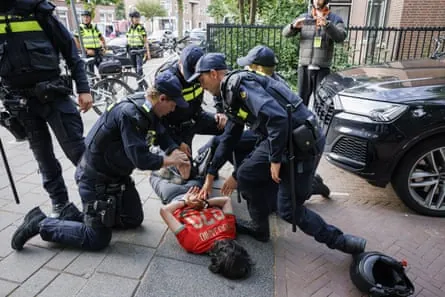
However, the situation in The Hague was different. Reports from the Dutch public broadcaster NOS indicated that police were targeted with bottles and fireworks. Omroep West, a regional news station, reported that at least 10 individuals believed to be Morocco fans were arrested in The Hague following attacks on the police. Additionally, the newspaper Algemeen Dagblad stated that four Morocco fans were arrested in Rotterdam, though the reasons for these arrests were not specified.
The match had been preceded by calls for calm from the police, particularly given the 3 am kick-off time in the Netherlands. The large Moroccan community in the Netherlands, estimated at approximately 440,000 people, meant that the game was always expected to generate strong reactions.
The Debate on Loyalty and Identity
The match also highlighted ongoing discussions about loyalty and identity among Dutch-Moroccans. Before the game, many individuals of Moroccan descent in the Netherlands were asked about their support for either team. While much of this was good-natured, the issue has been a contentious point, particularly with the rise of certain political figures.
Some Dutch-born players have chosen to represent Morocco, including Noussair Mazraoui, Sofyan Amrabat, and Anass Salah-Eddine, who played for the Netherlands at under-21 level before switching his international allegiance. This choice has led to commentary from politicians and commentators on the right, who have questioned a perceived lack of loyalty to their country of birth.
Former Dutch international Ibrahim Afellay, who was capped 53 times for the Netherlands, publicly expressed his support for Morocco, explaining his reasoning. In contrast, former international Rafael van der Vaart, now a television pundit, caused a stir with comments suggesting that Dutch-Moroccan players who were not deemed good enough for the Netherlands went on to play for Morocco.
Morocco‘s team has drawn extensively on Dutch expertise over the last decade, contributing to their strong performance in international tournaments, including reaching the semi-finals at the previous World Cup. The team’s current success, including finishing second in Group ‘C’ behind Brazil on goal difference, underscores their quality on the field.
The debate on social cohesion is expected to continue, but the camaraderie observed in Amsterdam between fans, with some Dutch fans congratulating their opponents and pledging support for Morocco for the remainder of the tournament, offered a reminder of positive interactions.
Morocco‘s victory sends them into a last-16 clash with Canada in Houston on Saturday.
Read Also
- Manchester City appoints Enzo Maresca as manager on three-year contract
- England faces defensive concerns ahead of DR Congo World Cup match
- Morocco advances to World Cup last 16 after penalty shootout victory over Netherlands
- South Africa exits World Cup with pride, coach Broos acknowledges power and speed deficit
Source: theguardian.com