By Bilal Ahmed
Concerns over World Cup expansion
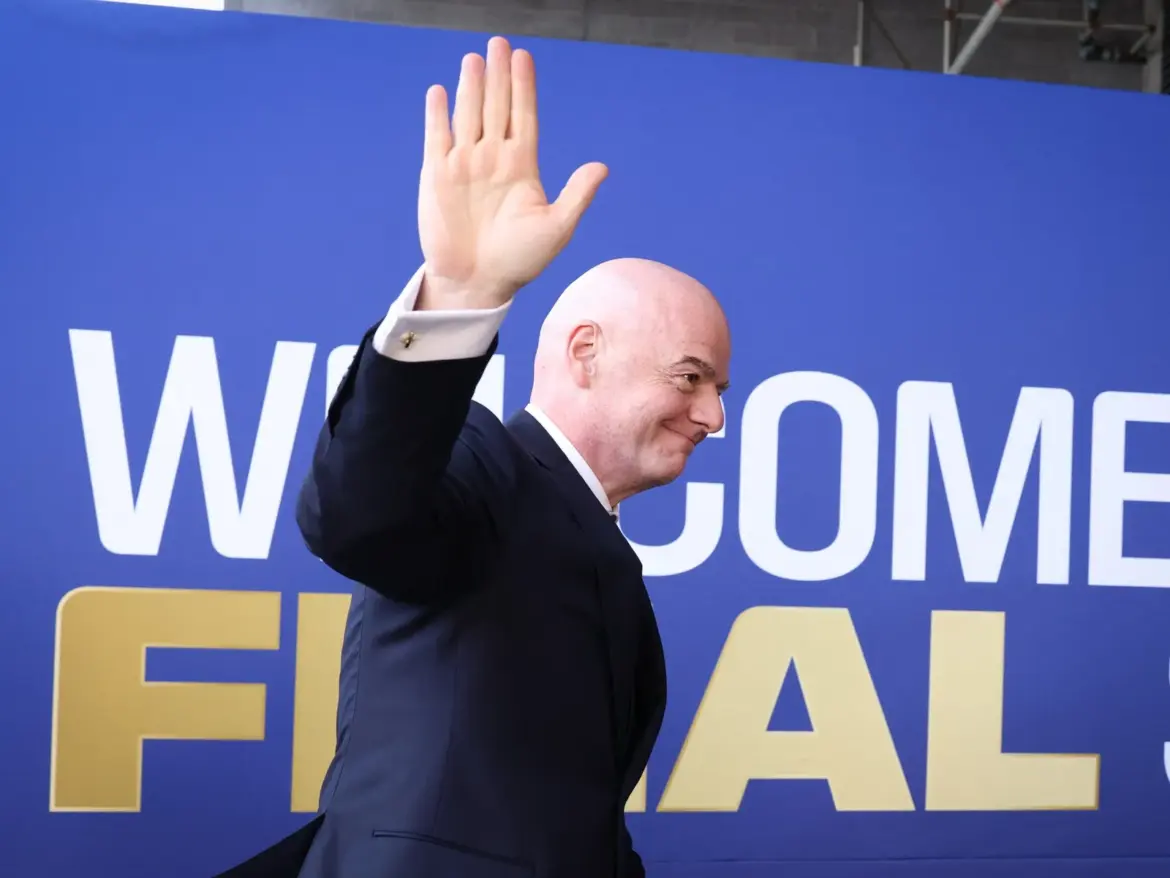
The head of the Spanish football league, Javier Tebas, has voiced strong criticism regarding FIFA‘s management and its plans for the World Cup. In an interview, Tebas accused FIFA of acting irresponsibly, particularly in light of discussions about a potential 64-team World Cup in 2030. He stated that FIFA President Gianni Infantino‘s tenure should conclude, asserting that Infantino’s time was “over.” Tebas highlighted that the football industry extends beyond the World Cup, despite its importance, and suggested that current FIFA decisions are detrimental to the sport.
Tebas expressed concerns about the competition calendar, noting that domestic leagues are crucial for sustaining football. He argued that an expansion to 64 teams for the 2030 World Cup, which is set to be co-hosted by Spain, Portugal, and Morocco, with some matches in Paraguay, Uruguay, and Argentina, would further strain the schedule. He emphasised the need for fewer national team matches and greater protection for domestic football at all levels, suggesting that FIFA’s leadership is making irresponsible decisions without fully grasping the implications.
The Spanish football chief believes that FIFA’s current approach is “destroying the football industry,” which he noted supports tens of thousands of jobs. He contrasted this with the World Cup, an event that lasts approximately 40 days and involves only a minority of players. Tebas reiterated that not everything should revolve around the World Cup, stressing the importance of national competitions in sustaining the sport.
Critique of FIFA’s governance
Tebas also criticised the method by which FIFA’s leadership is elected, describing the system as “fundamentally flawed.” He claimed this system has allowed Infantino to lead the global governing body for a decade. Despite his view that Infantino should step down, Tebas acknowledged that Infantino likely has the support of national federations and that the current state of affairs means he will probably remain in his position. He pointed out the absence of opposition candidates, suggesting that individuals are unwilling to run simply to lose, further indicating a perceived flaw in the election process.
During his time in the United States for the 2026 World Cup, Tebas mentioned hearing many individuals express disagreement with Infantino’s actions. However, he noted that these individuals often remain silent or complicit, which he found equally concerning. Tebas suggested that Infantino’s position could have been jeopardised by his involvement in a case concerning United States striker Folarin Balogun. Balogun, a 25-year-old player, avoided a suspension for his team’s last-16 match against Belgium following an intervention from US President Donald Trump.
Tebas stated that the suspension’s postponement was a serious matter. He indicated that if Belgium had not eliminated the USA, a case might have emerged that could have cost Infantino his job. However, with Belgium’s victory, the issue was reportedly buried. UEFA, European football’s governing body, had previously criticised FIFA’s decision regarding Balogun’s suspension, calling it “unprecedented, incomprehensible and unjustifiable.” This decision was cited as a reason for UEFA’s president, Aleksander Ceferin, not attending the World Cup final.
World Cup practices questioned
Beyond the expansion plans, Tebas also raised concerns about specific practices during the World Cup. He criticised the mandatory three-minute hydration breaks implemented by FIFA for all matches played in stadiums across the United States, Mexico, and Canada, regardless of conditions. While FIFA stated these breaks were for player welfare, critics have suggested they were used by broadcasters for advertising. Tebas noted that similar breaks are used in La Liga only when genuinely hot conditions warrant them, and he observed that some venues, such as those in Dallas, Los Angeles, and Atlanta, had air conditioning, making the hydration breaks seem like a pretext for commercials.
Another point of contention was the extended half-time interval during the World Cup final. The usual 15-minute break was lengthened to 27 minutes and 22 seconds to accommodate performances by various pop music artists. Tebas argued that FIFA arranges matters to suit its own interests, rather than those of football. He concluded that FIFA makes decisions based on its own agenda, often to the detriment of the sport, without considering the broader football community.
FIFA has not yet responded to requests for comment regarding the accusations made by Tebas.
Read Also
Source: aljazeera.com