By Ayesha Raza
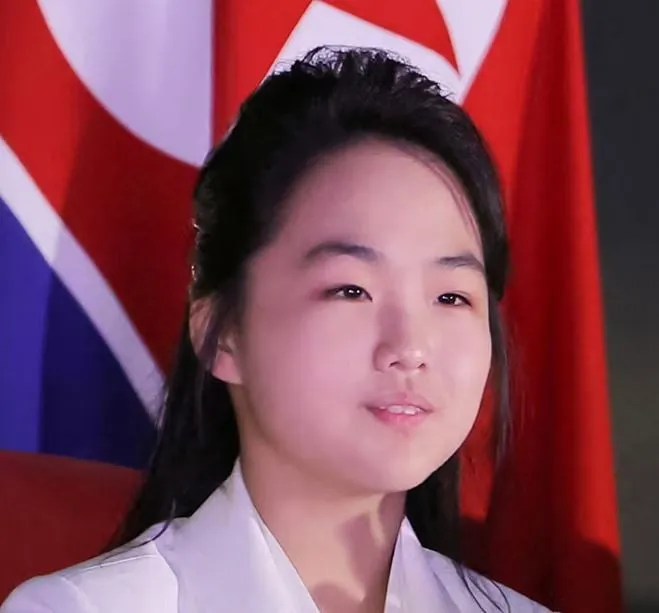
The elevation of Kim Ju Ae marks a significant shift in North Korea’s traditionally male-dominated succession practices. This change was publicly demonstrated in early 2026 when she was seen operating military equipment.
As of midday, South Korea’s National Intelligence Service believes Kim Ju Ae is the most likely successor to her father, Kim Jong Un. She is estimated to be around 13 years old.
The North Korean regime has begun a campaign of mythmaking and maternal statecraft to legitimize her potential succession. This campaign contrasts sharply with the patrilineal succession patterns historically followed by the Kim dynasty.
For nearly eight decades, power has transferred from father to son within the Kim family. However, Kim Ju Ae’s early public appearances differ from the traditional grooming seen with her father and grandfather.
The regime has utilized honorifics to signal her authority, presenting her in dark leather trench coats that de-gender her political identity. This approach aims to normalize her image as a future leader.
Analysts note that this elevation could represent the first female dynastic succession in modern authoritarian history. Yet, uncertainty remains regarding how the regime will manage this transition within its patriarchal society.
Experts suggest that opposing Kim Ju Ae may be perceived as opposing the divine order established by the regime. The question now is how North Korea plans to legitimize this unprecedented move.
Furthermore, Kim Yo Jong, Kim Jong Un’s younger sister, remains politically active but is not being groomed for succession. This decision adds another layer of complexity to the evolving dynamics of North Korean leadership.
The elevation of Kim Ju Ae signals a notable evolution in totalitarian statecraft. Observers will closely monitor how this shift impacts both domestic and international perceptions of North Korea.