By Bilal Ahmed
Spain celebrates second World Cup title
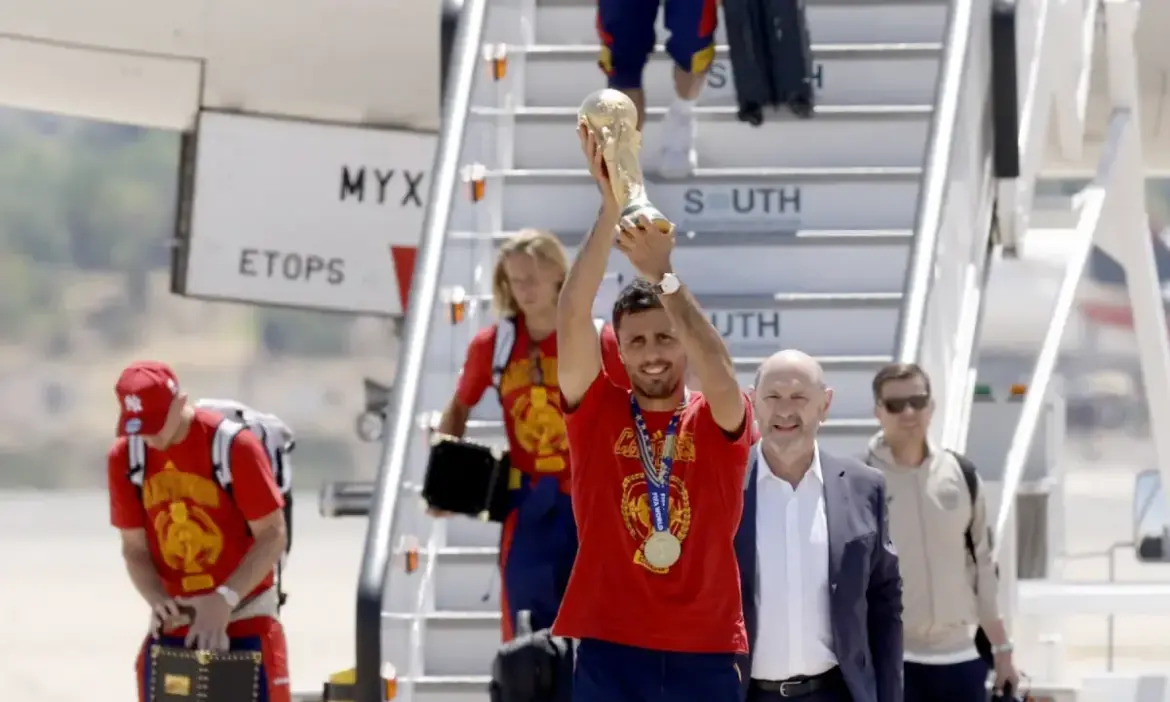
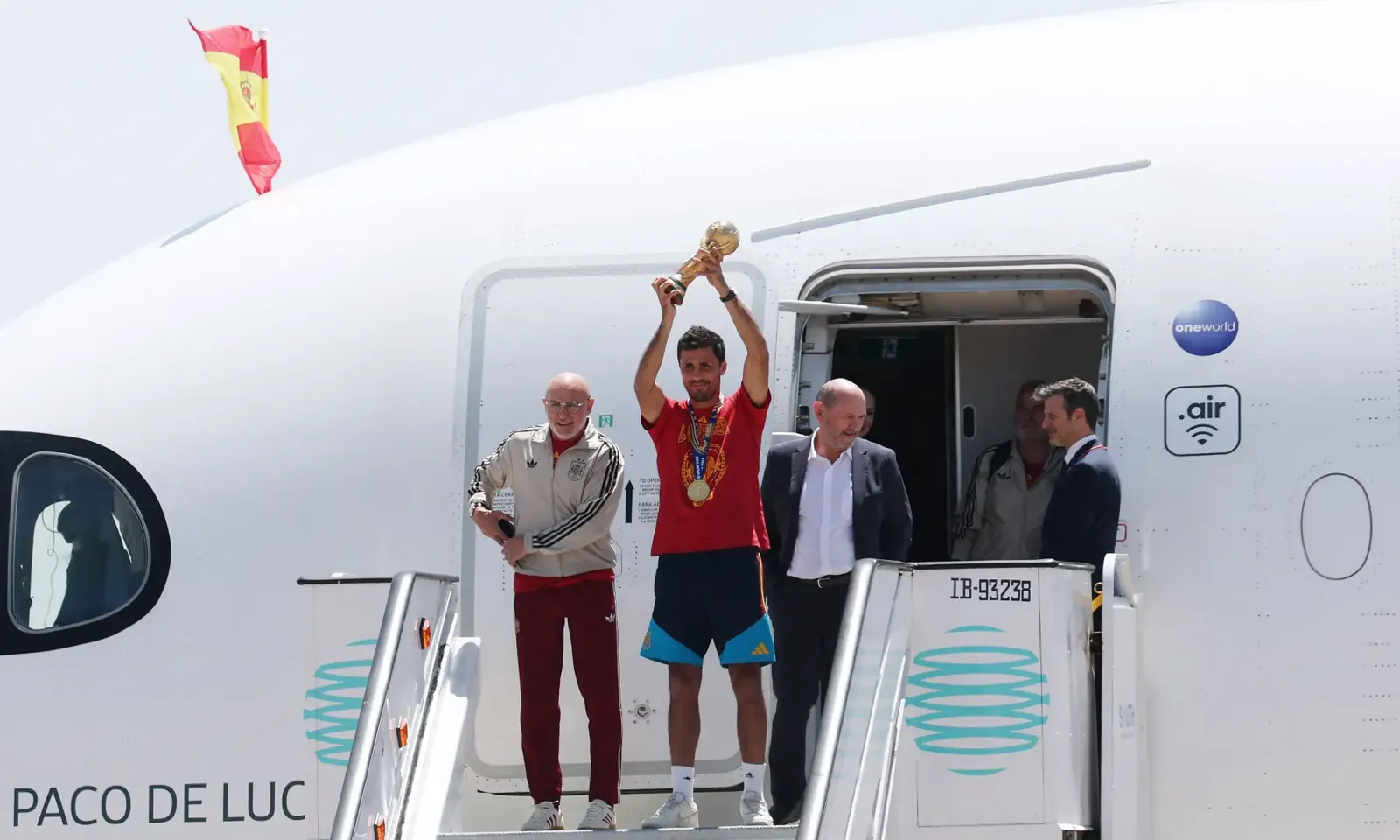
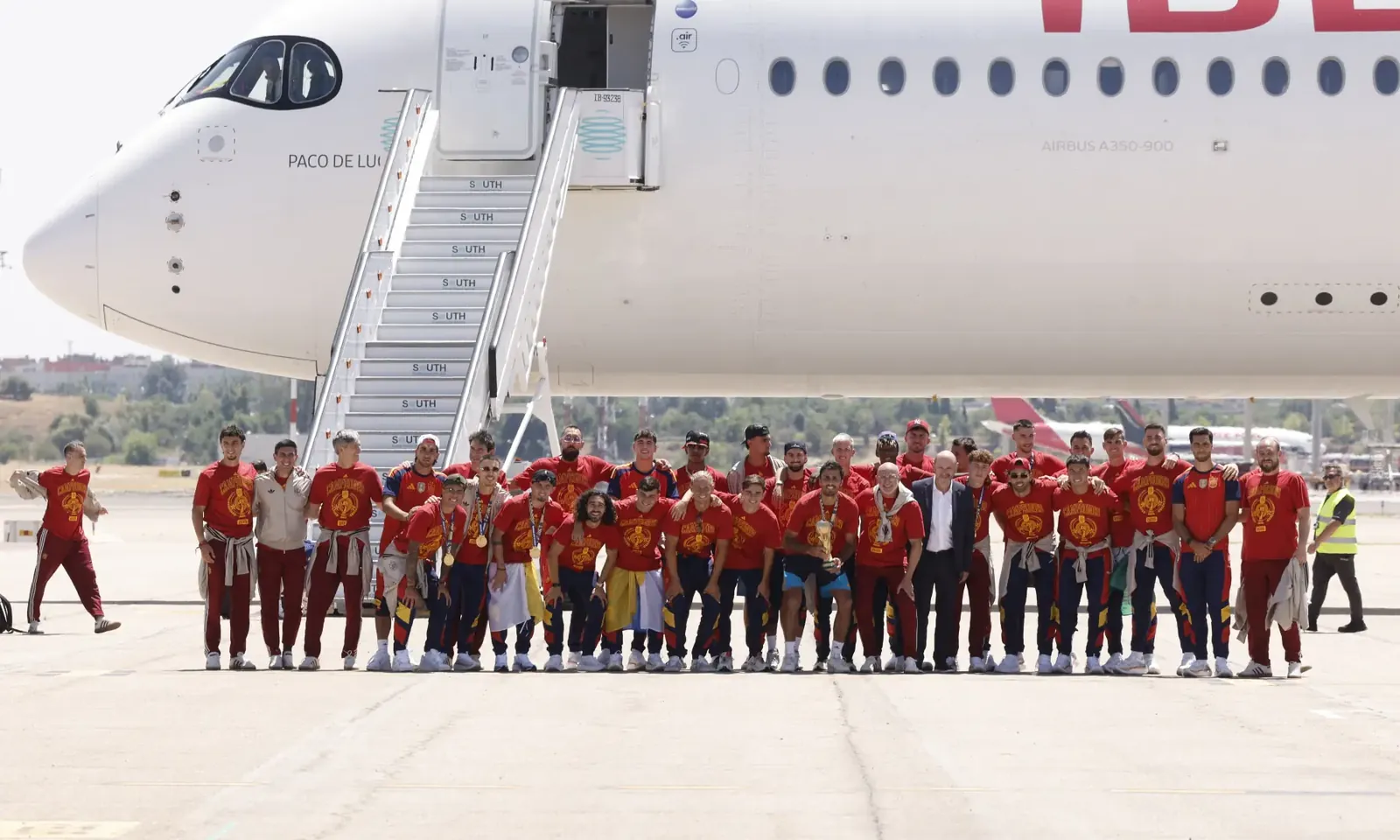
Spain has returned to Madrid as newly crowned FIFA World Cup champions, with an estimated one million fans anticipated to greet the team during a victory parade. The team arrived from the United States after securing their second star, following a 1-0 victory over Argentina in New Jersey. Spain captain Rodri held the World Cup trophy aloft as the team disembarked the Iberia plane.
The decisive goal was scored by Ferran Torres in extra-time, sparking widespread national pride. This marks Spain‘s second World Cup triumph, with their first occurring in 2010. Many younger supporters were not yet born when Andres Iniesta‘s extra-time goal secured the country’s initial victory in South Africa.
The celebrations began immediately after the final whistle, with seismic sensors across Spain detecting vibrations caused by fans. Researchers from the Geosciences Barcelona centre analysed data from the National Geographic Institute (IGN) and the Catalan Geological and Cartographic Institute (ICGC), which showed unusual signals in cities such as Algeciras, Barcelona, Cadiz, and Granada. These sensors picked up three clear bursts of activity: after Torres’ goal, following a later strike disallowed by VAR, and the strongest vibration after the final whistle. Scientists attributed these movements to “induced seismicity” resulting from human activity, specifically thousands of fans jumping, shouting, and celebrating simultaneously.
Similar vibrations were detected during Spain’s Euro 2024 final victory over England, where goals by Nico Williams and Mikel Oyarzabal also triggered measurable ground movements in Madrid and Barcelona. The morning after the World Cup final, Madrid’s main avenue, the Castellana, showed signs of the previous night’s festivities, with trash, beer cans, and glass shards scattered across the tarmac. Some supporters were seen sleeping on pavements or benches, while cleaning crews worked to prepare for the upcoming parade.
Victory parade and official receptions
Upon their arrival, the players are scheduled to be received by King Felipe VI at Zarzuela Palace, located on the outskirts of Madrid. Following this, Prime Minister Pedro Sanchez will meet the team at the government headquarters, La Moncloa. The main event for the public will be an open-top bus parade, commencing at Moncloa and proceeding to Cibeles square.
Francisco Martin, the central government’s representative in Madrid, confirmed that a ceremony involving the players will be held at Cibeles square, a traditional gathering point for Spanish national team celebrations. Authorities have planned additional security and transport measures to manage the large crowds expected along the parade route. For some fans, like Bruno Gonzalez del Yerro, a 32-year-old financier, the celebrations are set to continue. He noted that such victories are rare, occurring every four years, and that Spain had not won the World Cup for approximately 16 years, making a grand party well-deserved.
The Spanish women’s team also won the World Cup in 2023, marking the first time a country has held both trophies simultaneously. Spain is set to defend its title on home soil in 2030, as one of the co-hosts of the next World Cup alongside Portugal and Morocco.
Final match details and surrounding events
The 2026 World Cup final itself, while resulting in a historic win for Spain, was notable for events surrounding the match rather than the game play. The match featured the longest half-time in history, which included performances by artists such as Madonna and Justin Bieber. A pre-kick-off speech was delivered by Tom Cruise, and US President Donald Trump also made an appearance. Fireworks were a prominent feature, occurring before kick-off, during the half-time show, and after Spain‘s trophy lift.
Trump‘s presence was a significant talking point, especially given his prior non-attendance at games throughout the tournament. He arrived at New York New Jersey Stadium via helicopter, landing after a circuit of the venue. He was seen taking his seat alongside Fifa president Gianni Infantino approximately 20 minutes before kick-off, just in time for performances by Robbie Williams and Nicole Scherzinger in the closing ceremony. During the first half, he was shown the trophy.
The half-time interval lasted 27 minutes, featuring performances by Madonna, BTS, Coldplay, and Shakira, whose song ‘Dai Dai’ is the official anthem of the World Cup. Justin Bieber also performed an acoustic guitar version of ‘Everything Hallelujah’. Security for the final was heightened due to Trump‘s attendance, with the United States Secret Service overseeing arrangements. Gates opened four hours before kick-off, leading to long queues and thorough bag checks, though the game ultimately started without delays.
In a tragic incident, a 13-year-old boy died in Ciudad Rodrigo after a fountain collapsed under the weight of celebrating supporters. Meanwhile, in Buenos Aires, hundreds of thousands of people were expected to greet the Argentina team upon their return at 5pm local time.
The Spanish press lauded their team, with one publication describing them as “The kings of all-time!” and celebrating a “second star that will now be stitched onto the Spanish jersey after yet another masterclass in collective play.” The final match, the 104th of the tournament, saw Spain and Argentina as the last two teams standing after more than five weeks of competition with an expanded format of 48 teams. Argentina, despite the presence of Lionel Messi, struggled to create clear chances against Spain’s organised defence. Enzo Fernandez received a red card, and Ferran Torres scored after being set up by fellow substitute Nico Williams. Torres commented that the goal belonged to “47 million people.”
Read Also
Source: dawn.com
![FIFA reveals prize money for Spain, Argentina, other countries after 2026 World Cup [Full list]](https://nbianews.com/wp-content/uploads/2026/07/cluster_265869088028855-350x220.webp)