By Bilal Ahmed
The FIFA World Cup 2026, hosted across the United States, Canada, and Mexico, concluded with Spain lifting the coveted trophy. This edition marked the largest tournament in history, featuring 48 teams and over 100 matches. Spain secured their victory by defeating defending champions Argentina 1-0 in extra time, following a goalless 90 minutes.
This triumph marks Spain‘s second World Cup title, with their first win occurring in 2010 against the Netherlands. The team maintained an extraordinary unbeaten campaign throughout the tournament, conceding only one goal from the opening match to the final. Their defensive consistency and teamwork were key factors in their success, extending their unbeaten run to 38 matches.
Key Performances and Awards
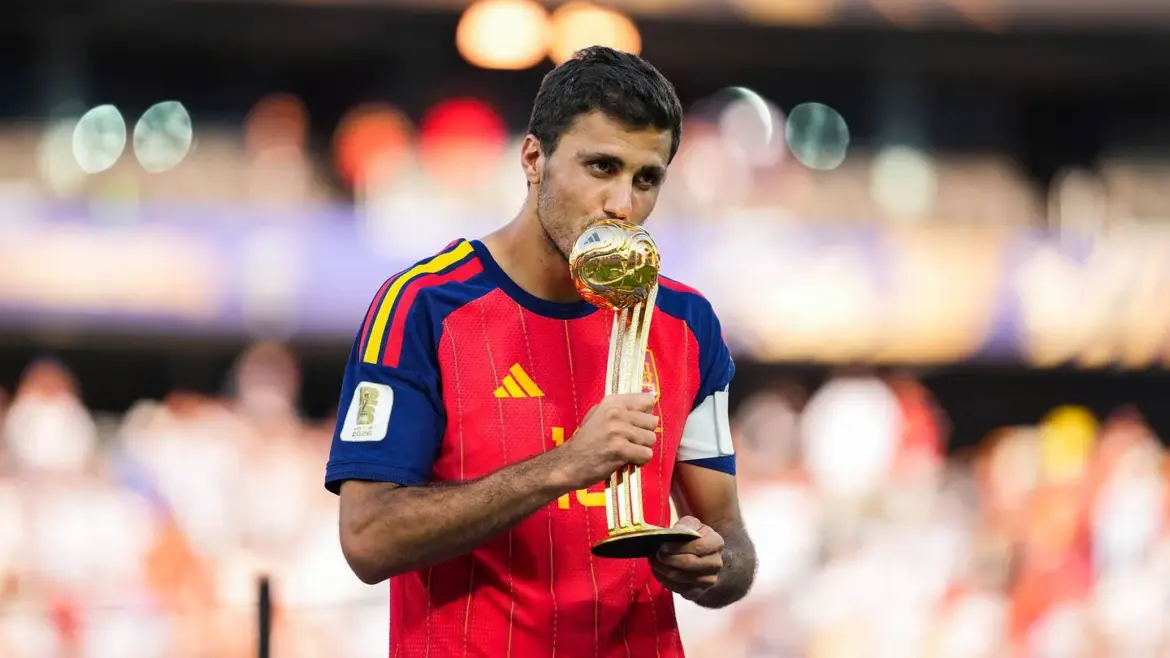
Much of Spain‘s success was attributed to teenage sensation Lamine Yamal, whose performances were a highlight of the tournament. His confidence and maturity in creating chances and challenging defenders were notable. The Golden Ball award for the tournament’s best player was presented to Spain‘s Rodri for his exceptional contributions. Argentina‘s Lionel Messi received the Silver Ball, while France‘s Kylian Mbappe was awarded the Bronze Ball.
Kylian Mbappe also secured the Golden Boot as the top goalscorer, netting 10 goals and providing four assists. Lionel Messi earned the Silver Boot with eight goals, and England‘s Jude Bellingham received the Bronze Boot after scoring seven goals and providing one assist. Spain‘s goalkeeper, Unai Simón, was recognised as the best goalkeeper, receiving the Golden Glove, and his teammate Pau Cubarsi won the FIFA Young Player Award.
Marc Cucurella, a teammate of Rodri‘s for Spain, praised Rodri‘s impact, stating that he controls and organises the team, highlighting his importance beyond just scoring or assisting. Cucurella, who moved to Real Madrid before the tournament, suggested that Rodri‘s performance in the World Cup could influence Real Madrid‘s president, Florentino Perez, to reconsider signing him.
England’s Achievement and Farewell to Legends
England achieved third place in the tournament, their first podium finish since their 1966 World Cup victory. They secured this position by defeating former champions France 6-4 in a high-scoring playoff match, largely due to a hat-trick from Bukayo Saka. Despite the loss, France‘s captain, Kylian Mbappe, received two individual awards.
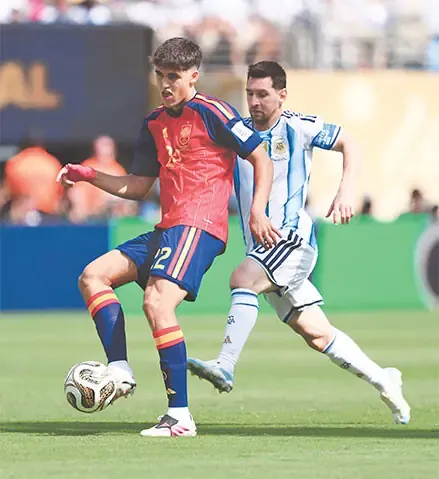
The tournament also marked the final World Cup appearances for several football legends. Players such as Lionel Messi, Cristiano Ronaldo, Croatia‘s Luka Modric, Germany‘s Manuel Neuer, Brazil‘s Neymar Jr, and Mexico‘s Guillermo Ochoa are expected to be in their 40s by the next World Cup in 2030, making this their last major international tournament. Their careers have inspired many, leaving behind significant legacies in the sport.
While these legends bid farewell, a new generation of talent emerged, with Spain‘s teenagers Lamine Yamal and Pau Cubarsi showcasing maturity beyond their years. Other young stars like Norway‘s Erling Haaland, Brazil‘s Vinicius Junior, France‘s Ousmane Dembele, and England‘s Jude Bellingham also delivered standout performances, thrilling supporters with their skills.
Looking Ahead to 2030
Despite some controversies regarding refereeing decisions, hydration breaks, and visa issues, the FIFA World Cup 2026 was a memorable event. The opening ceremony and halftime entertainment, featuring figures like Tom Cruise, Shakira, Madonna, Justin Bieber, and BTS, received mixed reactions from fans who hoped for a greater focus on football itself.
The next FIFA World Cup in 2030 will be primarily hosted by Spain, Portugal, and Morocco. Additionally, special centenary matches will be held in Uruguay, Argentina, and Paraguay to commemorate 100 years since the inaugural FIFA World Cup.
Source: dawn.com