
By Bilal Ahmed
Olympic Qualification Stakes
The return of cricket to the Olympic Games at Los Angeles 2028, after a 128-year absence, has added significant weight to every bilateral series India plays. What might appear to be a routine match can have implications for the team’s direct qualification to the Olympics. The men’s Olympic tournament will feature only six teams, making the qualification process highly competitive.
The International Cricket Council (ICC) has outlined specific qualification criteria. The highest-ranked eligible side from each of the four major continents—Asia, Europe, Africa, and Oceania—on December 31, 2026, will earn an automatic berth. These automatic spots are strictly limited to one per continent. The host nation, the United States of America (USA), has already secured an automatic spot.
For India, the pathway to Los Angeles runs directly through the ICC Men’s T20I rankings. Maintaining the top rank within the Asian continent is crucial for securing direct qualification without needing to participate in a qualifying tournament. The remaining five spots will be filled through a combination of continental rankings and a global qualifying tournament.
The Asian Rivalry
While England potentially overtaking India in the world rankings would be notable, it would not directly impact India‘s Olympic qualification. This is because England and India represent different continents in the qualification race, with England competing through Great Britain for Europe’s slot. The real challenge for India comes from within Asia, specifically from Pakistan.
Pakistan, currently ranked sixth globally, is India‘s closest rival for the Asian direct qualification spot. Every defeat suffered by India reduces the rating cushion that separates them from Pakistan. Recent losses, including two against Ireland and a 3-0 deficit against England, have already diminished India‘s points tally. A significant slide could allow Pakistan to climb above India in the Asian rankings by the December 31, 2026, deadline.
If Pakistan were to surpass India in the Asian rankings, India would then be compelled to compete in the 2027 global qualifier for the sixth and final Olympic spot. This scenario would introduce uncertainty for a team that has recently dominated T20 cricket, having secured back-to-back World Cup titles. The margin in India‘s favor, while still present, is no longer as substantial as it once appeared.
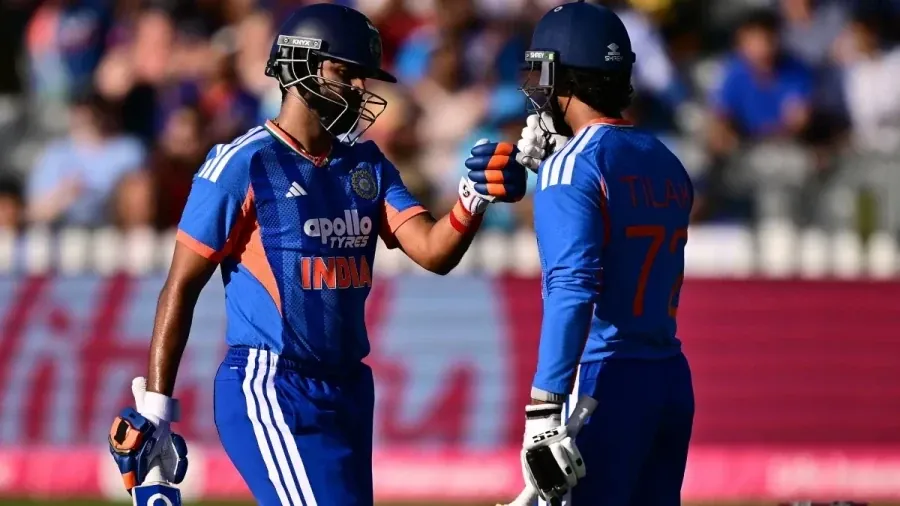
Upcoming Schedule and Implications
To safeguard its ranking and secure an Olympic berth, Team India has a busy schedule planned for the remainder of the year. Following the conclusion of the series against England, the team is set to play four more bilateral T20 series. These upcoming matches are vital for accumulating points and maintaining their lead over Pakistan and other Asian nations.
In late July, India is scheduled to travel to Zimbabwe for a three-match series. This will be followed by a home series against the West Indies in early October, consisting of five T20Is. The team will then head to New Zealand for another five-match series in October and November. The year will conclude with a three-match home series against Sri Lanka.
Each match in these series will be crucial for ICC rankings. The points earned will determine whether India can sustain its position as Asia’s top-ranked team. The pressure is on the team to return to winning ways and avoid complications in the Olympic qualification cycle, especially with the 2026 deadline approaching.
The outcome of the fifth T20I against England, while not solely determining India‘s Olympic fate, will indicate the team’s ability to halt its recent decline before the rankings and rival teams like Pakistan further influence the race to Los Angeles.
Read Also
Source: sports.yahoo.com